Why the tech industry can't keep up with the AI backlash
AI's externalities are growing faster than the industry can address them

This is a column about AI. My fiancé works at Anthropic. See my full ethics disclosure here.
On Wednesday, OpenAI CEO Sam Altman published an op-ed repeating his call for a new international body to govern artificial intelligence safety. “International co-operation like this seems a reasonable way to avoid power becoming too concentrated, and ensure that the benefits of AI are democratized,” Altman wrote in the Financial Times.
Altman’s proposal is sensible, and one that builds on his years-old call for something like an International Atomic Energy Agency for AI. Reading his essay, though, I imagined the people of the world asking themselves: what benefits?
Three and a half years after the launch of ChatGPT, the initial wonder that the world first felt about all-knowing answer boxes has increasingly curdled into anger, anxiety, and organized opposition. Tech giants have begun to confront the backlash directly, but the list of AI-generated headaches continues to grow. The Economist put a robot with a spear through its head on this week’s cover, warning: “The AI backlash is only getting started.”
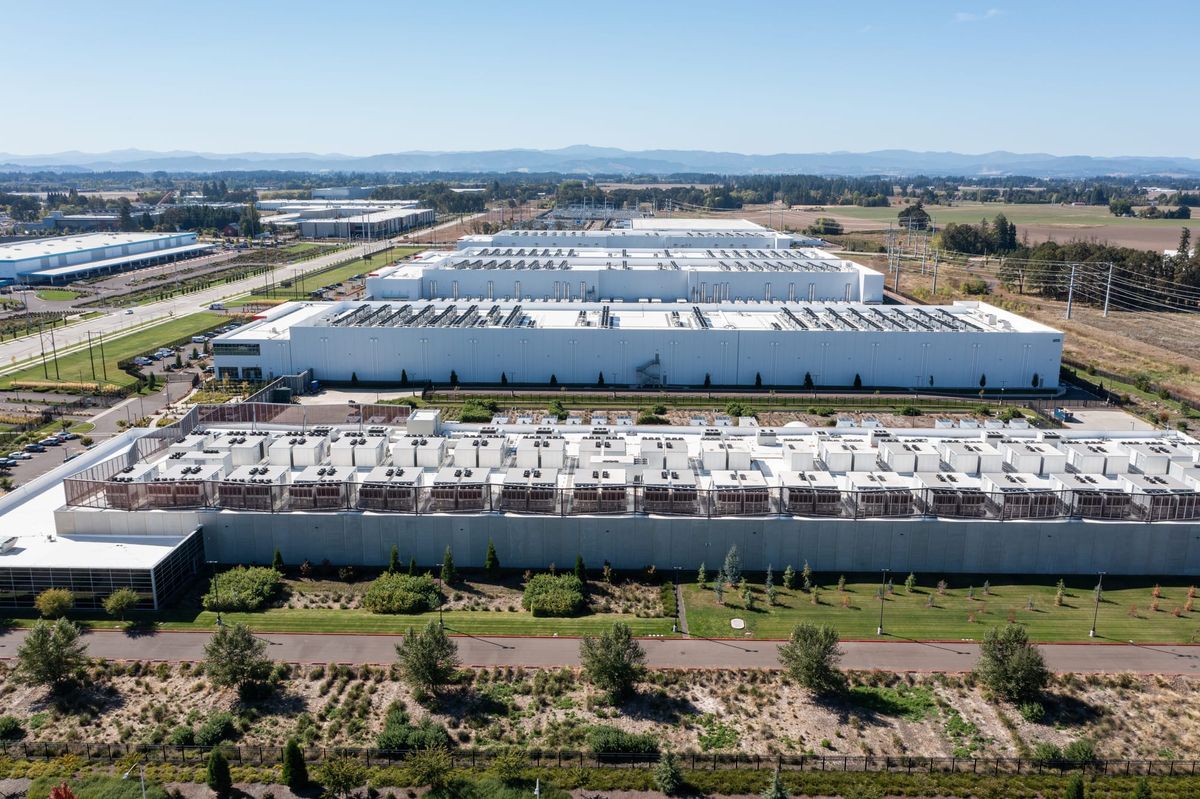
By now the public opposition to data centers is well known. In May, a Gallup survey found that 71% of Americans are somewhat or strongly opposed to a data center being built in their area — compared to 53% who feel the same way about nuclear power plants. And public sentiment has put an increasingly hard brake on the AI industry’s construction plans. Last month, an analysis by Data Center Watch found that opposition delayed or blocked at least 75 US data center projects worth $130 billion in the first quarter of 2026. The number of organized groups opposing the projects doubled to 833 in 49 states.
In part the opposition is a testament to the enduring power of American NIMBYism. You might not be able to get your local member of Congress to do anything for you, but you can almost certainly delay the construction of almost anything in your town without much trouble.
If some of the early complaints about data centers amounted to misinformation — complaints about water use have often been overstated — data centers have legitimate negative externalities that tech giants have only recently begun to address. There are the electricity bill hikes to local ratepayers; there are tax breaks that reduce funding for other government services; there are greenhouse gas emissions; there are constant infrasonic vibrations leading to “chronic sleep deprivation and insomnia, headaches, internal ear pressure and anxiety.”
Unless you happen to live within a few miles of a data center, though — or are one of the incumbents who might lose your seat over your support for them — so far it’s been easy to think of the issue as something that’s happening to other people.
But a primary anxiety behind the opposition to data centers has been economic — the reasonable fear that AI will eliminate or significantly change your job. And that fear has begun to materialize for lots of Americans whether they live near a data center or not.
The extent to which AI threatens jobs is one of the most-debated questions of 2026 so far, and data on the subject is decidedly mixed. (Something we’ve covered extensively on the Platformer podcast.)
It’s clear that there’s no AI jobs crisis now; hiring exceeded expectations in May, and the unemployment rate has held steady at a low 4.3% for the past three months. Layoffs often have multiple causes, and “AI washing” — where CEOs blame cuts on the technology in hopes that they will be rewarded by the stock market — is a real phenomenon. The Federal Reserve Bank of New York has attributed much of the recent rise in unemployment among young college graduates to the rise of remote work.
But enough warning signs are blinking yellow that there is reason to worry. AI is now the leading reason cited for job cuts in the technology industry, where adoption is the strongest.
And last week, a team led by Stanford economist Erik Brynjolfsson released new payroll data across 4.6 million workers in 730 occupations. It found new evidence for an oft-voiced fear that AI is reducing opportunities for junior employees. Among workers 22 to 25 in jobs considered highly exposed to AI, employment is now shrinking by 3.8% a year.
The overall effects remain small: AI-exposed jobs shrank 0.2% year over year, while the least-exposed jobs grew 0.1%. But Americans can be forgiven for extrapolating these trends out a few years and worrying about what it means for them. Nearly two-thirds believe AI will lead to fewer jobs over the next 20 years, according to the Stanford AI Index. Only 5% believe it will lead to more jobs.
Meanwhile, workers might find the best evidence for looming disruption at their own workplace. Study after study has found that executives are more excited about AI than their employees. Would they really be so excited if they did not believe that it could lower their labor costs? (This is the obvious rejoinder to the Bluesky-brain observation that “nobody wants this”: Your boss very much does.)
Indeed, it’s the very real demand for AI services that has opened the latest front in the AI backlash. The buildout of AI infrastructure is swallowing up the majority of computer memory and storage chips, and manufacturers are warning that prices will continue to rise into next year.
Already, Apple has raised prices for MacBooks and iPads by as much as 25%. iPhone prices seem likely to follow. (PC prices, too.) Last week Microsoft announced it would raise prices for its Xbox console by $100 to $150 — the latest in a series of increases. A few days later, in a market where gaming consoles have recently sold for $400 to $500, Valve debuted its cheapest Steam Machine at a price of $1,049.
Analysts expect that the memory supply crunch could last through 2027. That means at least a year and a half of AI-powered inflation that has already pushed the average cost of computer software and accessories up 15%. And with US wages relatively stagnant, higher prices are going to hurt.
It’s not as if tech companies are ignoring the backlash entirely. They’re offering to pay for electricity rate hikes; they’re covering infrastructure costs to support data centers; they’re spending millions on workforce retraining programs. (A new $500 million effort funded by the big labs, which will test wage insurance and other AI resilience strategies, was announced last week.)
The problem for the AI industry is that the externalities are growing faster than their plans to address them. In his op-ed, Altman offers up the usual list of future AI miracles to justify the disruptions to come: “the power to heal people, to discover cures and to deliver abundance on a scale the world has never known before.”
In the meantime, though, what AI is delivering at an unprecedented scale is annoyance. If the industry doesn’t start paying more of its share of the cost, and soon, the AI backlash of tomorrow will make today’s seem quaint by comparison.

Following
Claude Fable is so back
What happened: The US Commerce Department lifted its restrictions on Anthropic’s smartest models. Claude Fable 5 is now included across Anthropic’s platforms on its paid plans; starting July 7, it’ll be available by buying credits. Anthropic’s most capable model, Mythos 5, is back for selected partners.
In a letter to Anthropic co-founder Tom Brown, Commerce secretary Howard Lutnick said he was lifting the ban after Anthropic “agreed to proactively detect and address security risks associated with the models.”
After Amazon reported a potential jailbreak of Fable 5 a few weeks ago, the Commerce Department banned Anthropic from serving Fable and Mythos to foreign nationals. To ensure compliance, Anthropic shut down the models for all users.
In a blog post, Anthropic described its fix for the jailbreak Amazon found. But they also played down the severity of the original jailbreak, saying it “did not expose any unique Mythos-level cyber capabilities,” and only got the model to do “routine defensive cybersecurity work.”
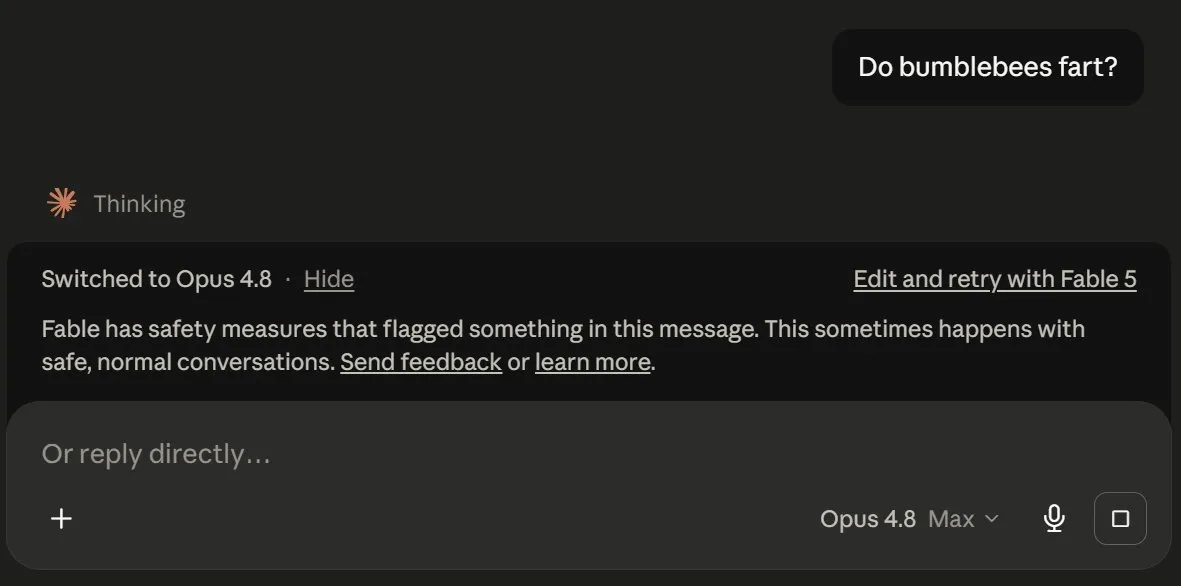
Due to conservative new safeguards, the company said for Fable 5, “some routine tasks like coding and debugging” will now fall to its less capable Opus 4.8 model.
Anthropic announced it is drafting an industry framework for the “severity of an AI jailbreak” along with Amazon, Microsoft, and Google, presumably to prevent all hell from breaking loose the next time someone at one of its partner companies spots a security issue.
And the company tossed in another defense of its safety practices: the Commerce Department’s own AI benchmarking division, CAISI (great name — Casey), “have tested both our prior and new safeguards and agree that they are extraordinarily strong.”
Why we’re following: The Trump administration began to reconsider its macho anti-AI-regulation attitude upon learning about Mythos’s cyber capabilities, eventually releasing a “voluntary framework” for the administration to vet models before release.
But the ban on Fable made it clear that framework isn’t really going to be voluntary. If the administration isn’t happy with a company’s safeguards, it's now clear that they will restrict it unilaterally.
The government should retain the ability to restrict frontier models. But for now the United States doesn’t have a clear or transparent framework for what it considers to be safe. And the concerns that the government banned Fable over were disputed by Anthropic, cybersecurity experts, and maybe even the Commerce Department’s own evaluators.
And so even though customers can access Anthropic’s new models once again, every AI company now faces a state of regulatory chaos. Speaking of which — where's GPT-5.6? How about Gemini 3.5 Pro?
What people are saying:
Dean Ball, OpenAI’s newly appointed head of strategic futures, criticized the opacity of this saga: “Great news! But we have no idea what Anthropic did to make the models 'safe,' what commitments Anthropic has made going forward, and whether or how any of this applies to other frontier models in the government's licensing queue.”
Former Facebook chief security officer Alex Stamos observed the way Anthropic’s blog post indicated frustration with the admin: “Anthropic's blog is saying: We have always cared about safety, we did a good job initially, the actual AI experts in USG agreed, we proved it, we will come up with standards so these things are better communicated, welcome to the AI safety club Trump admin.”
Stamos wrote that for the new industry jailbreaking framework, “The inclusion of Amazon as the first name in the coalition is not an accident. Anthropic is saying 'Amazon's inability to appropriately communicate severity threw our industry into chaos.'”
Google DeepMind policy researcher Séb Krier wondered if the ban might be reinstated: “fable just said something i didn't really like. does anyone have the united states government telephone number please”
The return of Fable was celebrated among Claude power users. “I'm so glad I procrastinated on some work long enough that I can use Fable 5 to do it,” wrote Peter Wildeford, head of policy at the AI Policy Network.
But the celebration didn’t last long for the coders after seeing Anthropic’s announcement that coding was one of the tasks that would default to Opus 4.8 for now. “Fable without coding is Disfabled. Look at what they did to our boy 😭,” @beffjezos complained.
Epic Games CEO Tim Sweeney wrote, “Thanks for keeping us safe Claude Fable 5!” posting the following conversation:
—Ella Markianos and Lindsey Choo
Those good posts
For more good posts every day, follow Casey’s Instagram stories.

(Link)
(Link)
(Link)
Talk to us
Send us tips, comments, questions, and cheap DRAM: casey@platformer.news. Read our ethics policy here.